
SACRED TEACHINGS
Find wisdom that goes beyond just the physical yoga practice. Here are some impactful teachings you can incorporate into your practice.

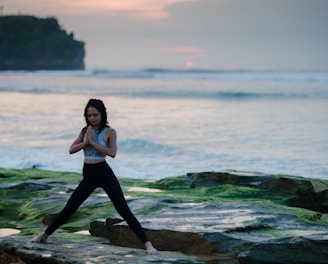


The Nadis & Energy Body
Understanding Ida, Pingala, and Sushumna, and how energy flows within us.


Unity Consciousness
Boundaries of the self vanish and why this so important in the practice of yoga.
The Adventure of the 8 Limbs of Yoga
Imagine you’re about to go on a journey — not across mountains or oceans, but inside yourself. Your goal? To discover your happiest, calmest, strongest self. The ancient map you’re holding is called the 8 Limbs of Yoga. Each limb is like a stepping stone leading you toward balance, peace, and connection.
Step 1: Yama — The Compass of Kindness
Before you even start, you learn how to treat others: be honest, don’t harm, share, and respect what belongs to others.
Step 2: Niyama — The Backpack of Self-Care
You pack good habits for the road: staying clean, being grateful, keeping promises to yourself, and believing in something bigger.
Step 3: Asana — The Strong Body Bridge
You cross a bridge made of yoga poses that keep your body healthy and ready for the journey ahead.
Step 4: Pranayama — The Wind of Life
You learn to use your breath as fuel — breathing in energy, breathing out stress.
Step 5: Pratyahara — The Quiet Cave
You step into a peaceful cave where noise and distractions fade, so you can listen to your own heart.
Step 6: Dharana — The Focus Lens
Like adjusting a camera, you learn to focus your mind on one thing without getting pulled away.
Step 7: Dhyana — The River of Calm
You float in stillness, meditating and letting thoughts pass like clouds in the sky.
Step 8: Samadhi — The Treasure of Connection
At last, you find the treasure: feeling completely at peace and connected with all of life.
This is the adventure of yoga — a journey you can take anytime, anywhere.
Here’s a 7-Day Challenge that introduces the 8 Limbs of Yoga in a fun, guided, and approachable way.
The Nadis & Energy Body
In yoga, we learn that we are more than just a physical body — we also have an energy body. Just like blood flows through veins, energy (called prana) flows through subtle energy channels known as nadis. There are said to be over 72,000 nadis in the human body, but three are considered the most important: Ida, Pingala, and Sushumna.
Ida Nadi
Ida begins at the base of the spine and travels upward along the left side of the body, weaving in and out until it reaches the left nostril. It is linked to the moon, cooling energy, rest, intuition, and the feminine aspect of our nature. Ida represents calmness, reflection, and inward focus.Pingala Nadi
Pingala also begins at the base of the spine but travels upward along the right side of the body, ending at the right nostril. It is linked to the sun, warming energy, action, logic, and the masculine aspect of our nature. Pingala represents vitality, focus, and outward expression.Sushumna Nadi
Sushumna runs straight up through the center of the spine, connecting the base chakra to the crown chakra at the top of the head. This is the central channel of spiritual awakening. When the energies of Ida and Pingala are balanced, prana naturally flows into Sushumna, allowing us to experience states of deep meditation, clarity, and expanded awareness.
How Energy Flows
Throughout the day, your breath (and energy) alternates between Ida and Pingala, influencing how you feel — sometimes calm and creative, other times active and focused. The goal of yoga practices like asana, pranayama, and meditation is to harmonize Ida and Pingala so energy can rise through Sushumna, awakening higher states of consciousness and balance in everyday life.
In simple terms: Ida and Pingala are like the left and right rivers of your energy body, while Sushumna is the main channel that awakens your highest potential when both rivers flow in harmony.
If you would like to learn more about our masculine and feminine essence, you might find our Pingala & Ida Master Class interesting.
15
Join our community
What Is Unity Consciousness?
At its core, unity consciousness means:
The ego dissolves: The sense of “I” as a separate identity fades.
Oneness with the universe: You feel connected not just with other people, but with nature, the cosmos, and the divine.
Non-duality (Advaita): This is the philosophical view that there is no fundamental difference between the individual self (Atman) and the universal consciousness (Brahman).
How Yoga Leads to Unity Consciousness
Yoga, especially in its traditional eight-limbed path (Ashtanga Yoga), provides a structured approach toward reaching unity consciousness:
Yama & Niyama (ethical principles) – Purify your mind and actions.
Asana (physical postures) – Balance and strengthen body and mind.
Pranayama (breath control) – Regulate life force energy.
Pratyahara (withdrawal of senses) – Turn awareness inward.
Dharana (concentration) – Focus the mind on a single point.
Dhyana (meditation) – Sustain deep awareness without distraction.
Samadhi (absorption) – Merge individual consciousness with the infinite.
At the final stage, Samadhi, the boundaries between self and other vanish. This is unity consciousness.
Why Is Unity Consciousness Important in Yoga?
Because it represents the goal of yoga.
Liberation (Moksha): Unity consciousness frees you from the illusion of separateness and suffering.
End of duality: You no longer see the world in terms of subject vs. object, me vs. you, or good vs. bad.
Pure awareness: You realize your essence is not your body, thoughts, or ego—but the unchanging witness behind it all.
Compassion and peace: When you feel one with all beings, love and empathy arise naturally.
© 2025. All rights reserved.